
Nathan Green was enjoying his holiday when his phone started pinging. While Nathan was stood in Václav Havel Airport in Prague, friends, family and acquaintances hundreds of miles away were all concerned for his wellbeing.
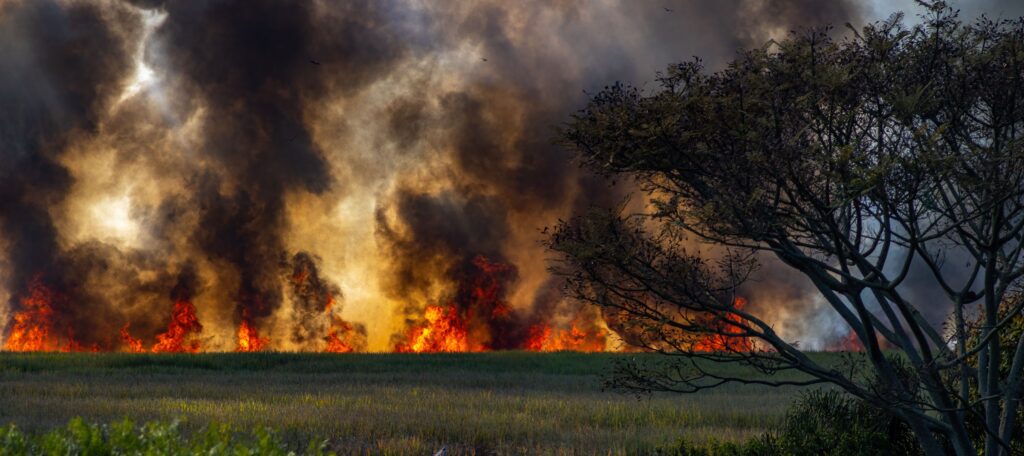
Nathan discovered a not insignificant wildfire was burning close to his home and business in the Berwyn Mountains of Wales, and it was apparently getting closer. Neither he nor the person watching his home for him had any idea that the fire had developed. Fortunately, the blaze changed course at the last minute and Nathan’s property was spared.
The whole incident planted a seed in Nathan’s head, and he set about developing a solution.
“It was an extremely alarming way to discover there was a wildfire heading towards my home,” said Nathan. “Once I started looking into it, I realised the information wasn’t necessarily absent – it was scattered all over the place. Different fire services publish information in different ways, if at all.
“Satellite systems can detect fires from space, local media and communities may know about incidents, but there isn’t one simple UK-wide picture for somebody who just wants to know: is there a wildfire near me? Am I and my property safe? Wildfire Watch grew out of trying to solve that problem.”
The tool brings together those disparate information sources, including near-real-time satellite fire detections and information published by UK fire and rescue services. The technology processes different types of intelligence and relates reported activity geographically. This removes the urge to check multiple, fragmented sources on an individual basis.
But it is not just recording fires on a map; users can monitor the locations that really matter to them, receiving automatic alerts when wildfire activity is detected or reported nearby.
The launch of Wildfire Watch comes as the number of wildfire incidents continues to rise. 2026 recorded record highs, surpassing numbers set the previous year. Major conflagrations in the West Midlands and South Yorkshire highlight that wildfires aren’t restricted to remote locations.
Nathan believes that the UK needs to be better prepared for the threat. He says: “Wildfire is no longer something we can think of as somebody else’s problem in southern Europe, Australia or California. We already have extraordinary technology capable of detecting heat and fires from satellites hundreds of kilometres above us. We have fire services publishing incident information and communities sharing what they’re seeing on the ground.
“The missing piece is bringing those things together in a way ordinary people can actually use – and alerting them when it matters to them.”
Nathan’s background spans business and systems analysis, software engineering, website development and practical problem-solving. For over two decades he has developed and operated an off-grid property and glamping business in the Berwyn Mountains gaining experience of renewable power and remote monitoring.