
After Chinese President Xi Jinping’s APEC speech, Australian and Canadian business leaders called for deepening ties in AI and supply chains with China.
At the APEC CEO Summit in Shenzhen on 19 November, international leaders from Canada, Australia, New Zealand and 115 Fortune Global companies listened to President Xi Jinping’s keynote address on China’s 15th Five-Year Plan (2016-2030).
The APEC forum is one of the most important business meetings in the world. With 21 members, which have 38% of the world’s population and 60% of global GDP.
Xi Jinping pledged a “super-sized open market,” with lower tariffs, expanded market access and also to what he called an “institutional opening-up of rules, regulations and standards. He also called on Asia-Pacific economies to promote open trade and focus on building a business community built on shared prosperity.
There were calls to foster artificial intelligence partnerships, integration of digital economies and a transition to low-carbon industries.
APEC 2026: Calls for open trade amid tariff tensions
Some participants had concerns about trade barriers and rising protectionism, making it more difficult to address worldwide challenges.
Li Kian Chuan, chairman of Malaysia-China Business Council, said that unilateralism and protectionism were on the rise, with more tariffs as well as non-tariff barriers “All these barriers add to our costs,” he added. “That is why we advocate openness.”
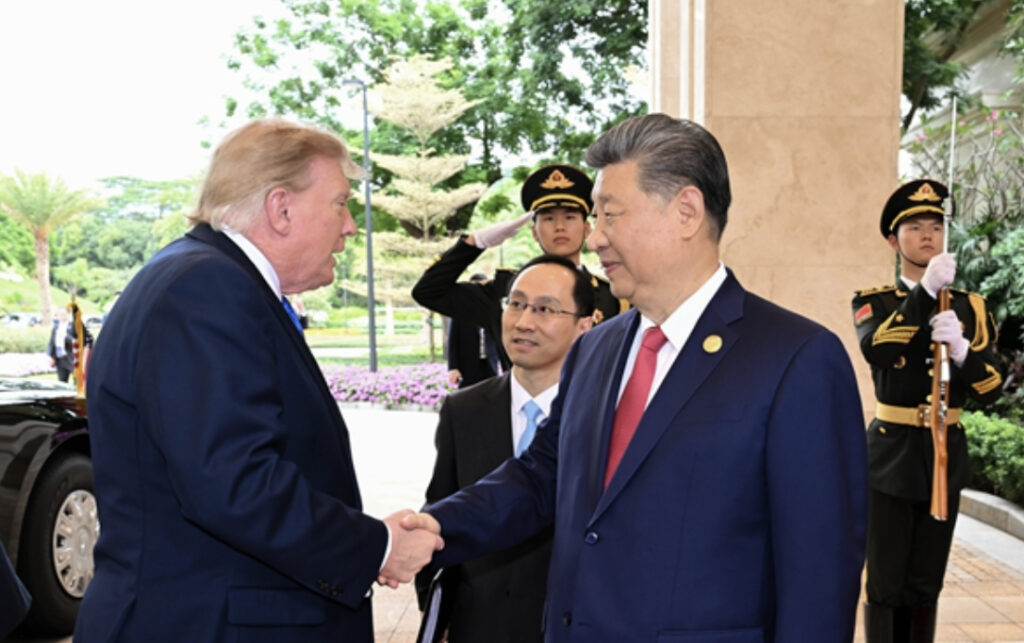
The APEC Summit was also the setting for a trilateral meeting of Xi Jinping, Vladimir Putin and Donald Trump. It is the first time the three leaders have met officially for talks.
However, despite agreeing a peace statement, there was no mention of the wars in Ukraine and Iran. President Putin was in bellicose mood, saying that Russia “will respond to strikes on the Crimean Bridge.”
The three super powers agreed to an increase in global oil supplies. However, there was a stalemate on US-China tariffs, with little improvement over rare earth minerals, tariffs and semiconductors.
China is one of the world’s most in-demand utilities – critical minerals – controlling more than 70% of global refining capacity – with around 90% of global rare-earth processing. As a result, all the major economies are competing to secure supplies with China.
Delegates voiced concerns that trade wars could continue when the US-China trade truce expires in January 2027. APEC economies failing to integrate AI and tech reforms into domestic policies could lag behind in productivity and growth.